Chapter V · Identity & Belonging
What an Ordinary Day Holds in Ukraine
Listen to this essay
AI-generated narration
In a grocery shop in Ukraine, I watch people choosing what they need for the day. There are vegetables in the bins, familiar gestures, and moments when someone smiles. I look at the Ukrainian products on the shelves and think about the lives continuing around me.
I am here because I want to help. Yet an ordinary day can leave me with more feelings than I know how to put into words. I feel them in people, in the places I pass through, in situations I witness, and sometimes in the silence around them.
What stays with me is how much people are trying to keep their lives going while they do not know what those lives may soon require of them. I can see something ordinary taking place and still feel the pressure surrounding it. Being here brings both much closer.
Choosing what is needed for today
I remember a woman smiling beside a bin of onions, with a bag in her hands. There were pumpkins beside the onions. It was a simple moment in a shop, the kind of moment I might hardly stop to think about elsewhere.
Here, I find myself paying attention to it. People still need groceries. They still have to choose what to take home. A smile can belong to that moment even when there is a great deal to worry about beyond it.
I would not want to decide what that woman was feeling from the expression I happened to see. But more generally, in the shops I have visited, I have felt a nervousness around the ordinary activity. It is something I notice in the atmosphere, even when people look happy.
When I speak with people, some of that uncertainty becomes easier to name. They do not know where things are going, what will happen to them, or what they may need to do. There are decisions they might eventually have to make because the circumstances leave them with fewer possibilities.
I find that difficult to take in. Choosing something for today is one thing. Trying to imagine the choices that may still be available tomorrow is much harder. A person can keep attending to the first while carrying the second almost continuously.
I leave a shop thinking about the people inside it. I wonder how much attention an ordinary task takes when part of your mind is already occupied by what might change.
Watching something approach
At other moments, I am looking at the air-alert map. I watch the markers showing Russian drones moving towards an area where, for now, things are quieter. I find myself expecting that an alarm may soon reach that area too.
There is a particular feeling in watching that movement. The quieter place is still quiet, but I am already thinking about what may be coming towards it. I look at a region on a screen and think about the people whose day is taking place there.
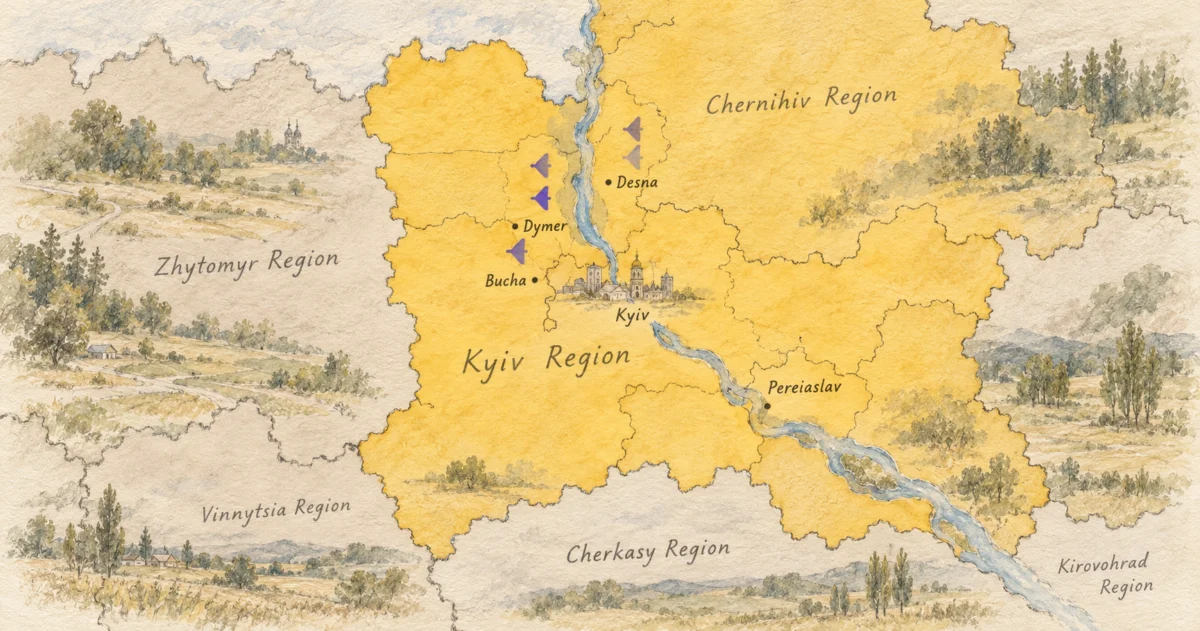
It brings the uncertainty into view without making it easier to live with. People have to decide what to do with the information they have. They cannot know everything that will happen before they make the next decision.
I feel the strain of that while I am here. I do not want to confuse my experience with the experience of someone whose home, work and family are bound up in it. But being near that uncertainty affects me. Sometimes I find myself carrying the feeling into a moment that looks quite calm.
The quiet beside the road
I have also been looking at the landscape. There are hills, fields and trees beginning to change with the season. I have stopped to notice the clouds and the light. The beauty is real, and I am glad I can still feel it.
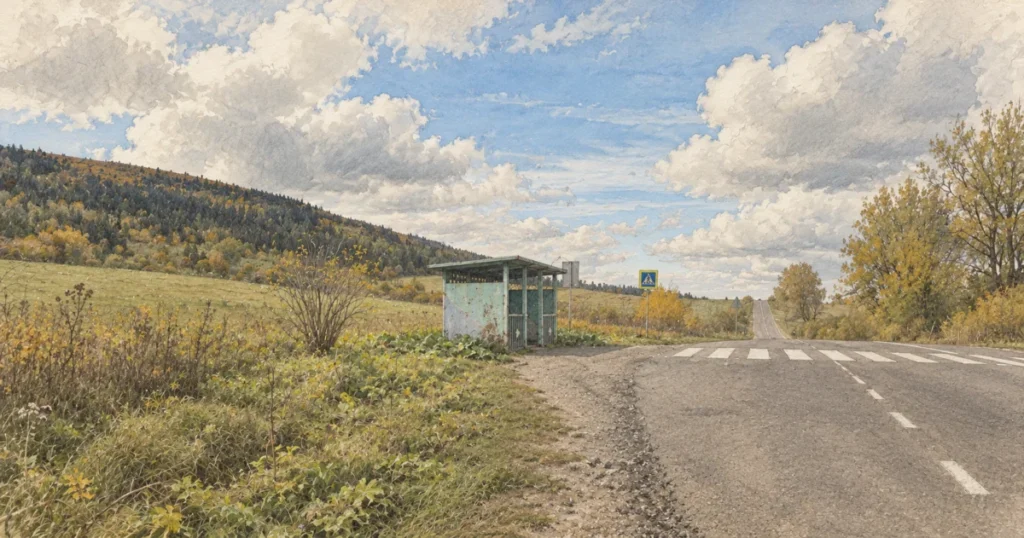
On the roads I have been travelling, I keep noticing how few people I see. I photographed an empty bus shelter beside a road stretching away over a hill. It was the middle of the day. There was no one waiting in the shelter in the moment I stood there.
I do not know who would usually be there or where the people I do not see have gone. I would not want to make the quiet answer those questions for me. What I know is that I have encountered that emptiness often during these days, and it leaves me with a feeling I cannot easily settle.
I can look at a beautiful place and feel sadness there too. Sometimes nothing particular needs to happen for the feeling to arrive. The surroundings, what I have heard from people, and what I am thinking about all meet in that moment.
That is part of what I find so difficult to explain about being here. The feelings do not arrive one at a time. I can be glad to see something, worried about someone, and unsure what I could do, while still looking at the same stretch of road.
What I left in a small chapel
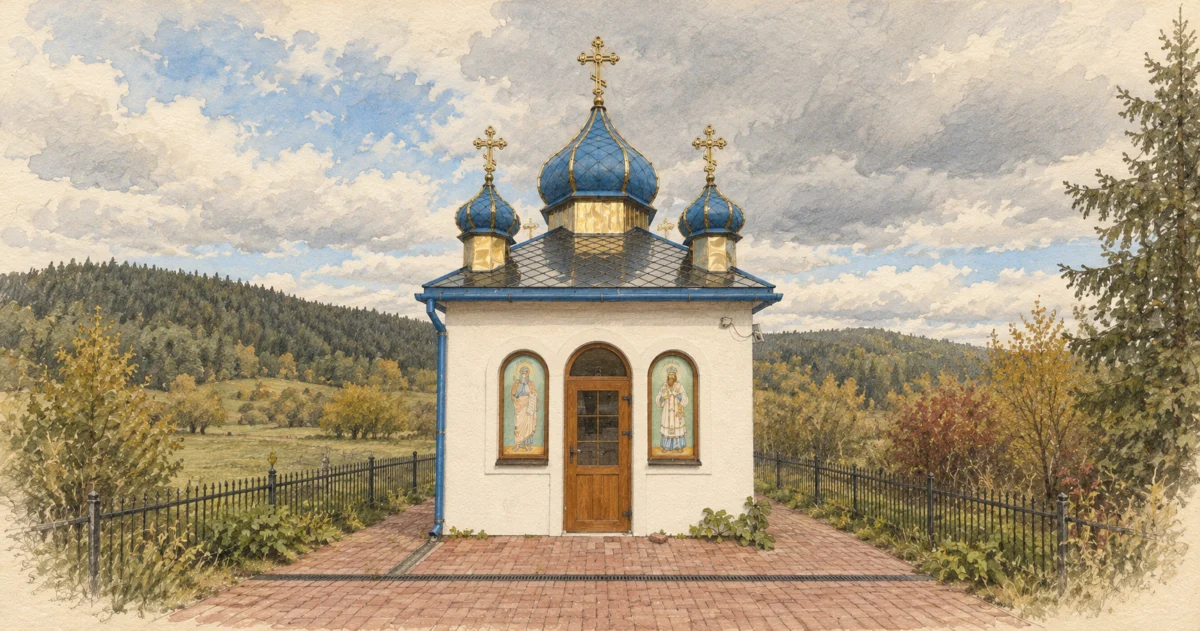
On 12 October, I left a handwritten note at a small chapel beside the road. Its blue domes stood against the clouds. I had been taking in so much that I wanted to put at least part of what I felt into words.
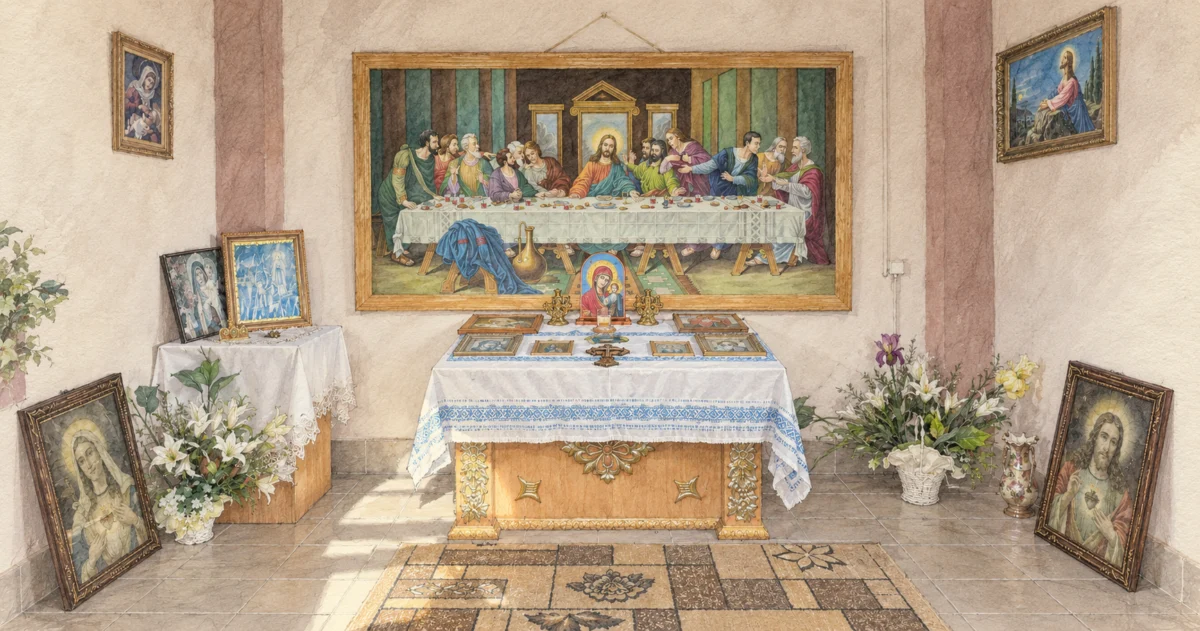
Inside, I looked at the altar, the icons and the cloth laid over the table. There were flowers on either side. It was another kind of quiet. I could stand there for a while without needing to give a complete explanation of what had brought me to that feeling.
I do not know whether to call what I wrote a wish or a prayer. Perhaps, for me, it was both. I wrote that the road had brought me from far away and that my heart was asking for one thing:
May every child have a home, and may everyone who is awaited return.
Those were the words I left in Ukrainian, with love and hope. I signed my name beneath them.
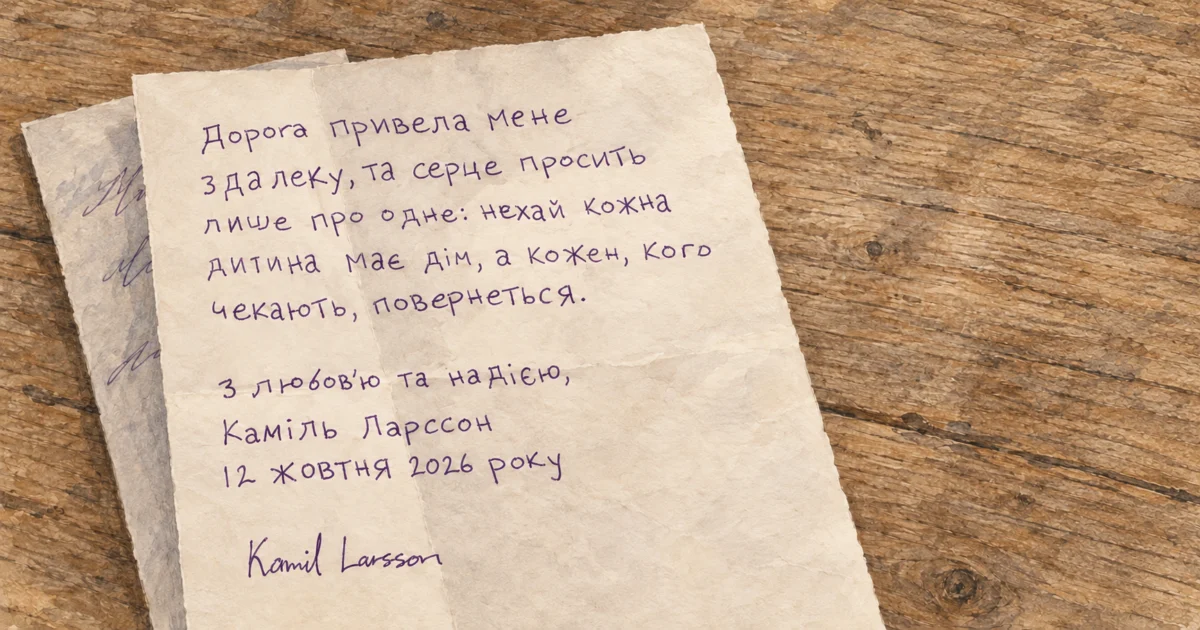
I think about a child having a home, and about a person who is being waited for somewhere. There are lives and relationships inside those wishes that I cannot know in full. Still, I know why I wanted to write them.
I wanted children to have somewhere they belonged. I wanted the people waiting for someone to be able to see that person again. I wanted something good for people whose circumstances I could not change just by caring about them.
The note was a small thing to leave. The wish behind it remains with me.
When help seems to be needed everywhere
I am in Ukraine to try to help, and at times I find it difficult to know where to begin. Everywhere I look seems to hold another need. I feel the pressure of that. I feel how difficult so much of life has become, and I do not know how to turn everything I feel into something useful.
Wanting to help does not immediately tell me where I am needed. A visible difficulty can draw my attention while another need remains less obvious. I need to listen to the people living with the circumstances and find out what would actually make a difference to them.
I have written about this in Change the Circumstance, Not the Person. An offer has to reach something the other person can use. Being here makes me return to that question with more urgency: what can I realistically do, and would it help?
I want to be honest about the answer. If I can offer something, I want the person to be able to count on it. If I do not yet understand what is needed, I need to keep asking and paying attention. The strength of my feeling cannot do that part for me.
There are moments when the scale of what I see makes any possible beginning feel very small. I still need to find a beginning. Someone may need something particular that I can offer, even while there is so much else I cannot resolve.
What stays after the moment has passed
When I think back over these days, I do not arrive at one feeling that explains them. I remember the groceries, the smile beside the onions, the map I kept looking at, and the road with no one waiting at the bus stop. I remember the chapel and the words I left there.
Each of those moments brings something different with it. Some make me feel close to people. Some leave me worried. Some make the wish to help feel very clear, while leaving the next step uncertain.
I cannot make sense of why people have to carry so much uncertainty while trying to live their lives. I can try to understand more of what it asks of them. I can take their answers seriously, and keep looking for a part in which I can be useful.
For now, I am here. I am paying attention, and I am still trying to find where the help I can offer is needed. I would like the care I feel to reach someone in a form they can actually use.
Letters from Kamil Larsson
Get the next essay
New essays and occasional notes, sent when there’s something worth sharing.
Your inbox, respected. No selling your address. No open tracking.