Essay 08 of 08
What I See in Ukraine
Listen to this essay
7:33 · English
I am in Ukraine as I write this. What stays with me is how hard people seem to be trying to continue their ordinary lives during the war. I sometimes think I can see worry in their eyes, although I cannot know what someone is carrying simply by looking at them. What I can see is the effort to keep living, as normally as circumstances allow. I find myself admiring that effort.
I hear people speak dismissively about Ukrainians, as though the name of a country could tell us what to expect from everyone who belongs to it. I find that difficult to accept. There are individuals here, with different lives, different losses and different ways of trying to manage. Knowing their nationality does not mean knowing them.
The words that come to me are strength and determination. They describe something I recognise in the people I see. Yet I want to be careful with my admiration too. I do not know how much effort an ordinary day costs someone, or whether they feel strong while getting through it. I would want to respect them just as much on a day when they could not manage.
The faces in the photographs
I remember the faces in the memorial photographs. I remember looking at the dates when people were born and when they were killed, and thinking how young so many of them were. I think about what they stood up for, and about the fact that they had to fight at all. There is sadness in that which I find difficult to put into words.
Looking at those faces, I think about the families left behind. I cannot know each person’s life from a photograph. But I think about what the loss of a parent, a child or a partner means to the people who loved them. The photograph gives me a face to remember. For someone else, it may hold the face they most wish they could see again.
I have seen people looking at the photographs, and I have felt sadness in watching them. I do not know whether they knew anyone pictured, or what brought them there. But I think about the families for whom this loss continues long after a passer-by like me has walked away.
What I remember from Mariupol
I was in Mariupol twice as a frontline medic. I remember the people I helped and the convoys going into and out of the city. I remember the screaming and the silence, the wounds and the sadness. When I try to explain why Ukraine matters to me, those memories are part of my answer.
There was joy too, when something was achieved at the front. I remember that alongside the feeling that, in the end, we lost everything. The loss does not remove the moments when there was something to be glad about, or the people I was there to help.
I cannot give a complete account of anyone else’s experience through my own. What I can say is that the people I remember matter to me. Hearing a whole population dismissed so casually feels especially painful when I think about them. I wish there were more willingness to consider the person before reaching for a judgement about the country.
Leaving and wanting to return
One accusation I have heard is that Ukrainians who leave the country are really on holiday, because some later return for a visit. To be honest, that makes me angry. A journey back is being used to decide that someone’s reasons for leaving could not have been serious. I do not understand how we can be so certain about a life we know so little about.
If someone believes that leaving is necessary to protect themselves or their children, I respect that decision. Admiring people who remain in Ukraine does not make me think less of those who go. I would not want a parent to put proving their courage ahead of what they believe will keep their family safe.
I can also understand wanting to return. If I had been forced to leave my home, I imagine I would keep thinking about going back. A visit could mean a great deal without answering the much larger question of whether I could live there again. I would want someone judging my decision to leave room for that difference.
In writing about returning home and belonging, I have tried to understand how much the word home can contain. It can remain important even when living there is difficult. I would not assume that my reasons for returning were the same as anyone else’s, but I recognise how inadequate it would be to describe that attachment as a holiday.
I keep coming back to the circumstances behind another person’s choices. From outside, we may see that someone left, stayed or returned. There is so much we may not see about what made that decision possible or necessary. Before speaking with contempt, I think we owe the person at least that much consideration.
Someone a child can count on
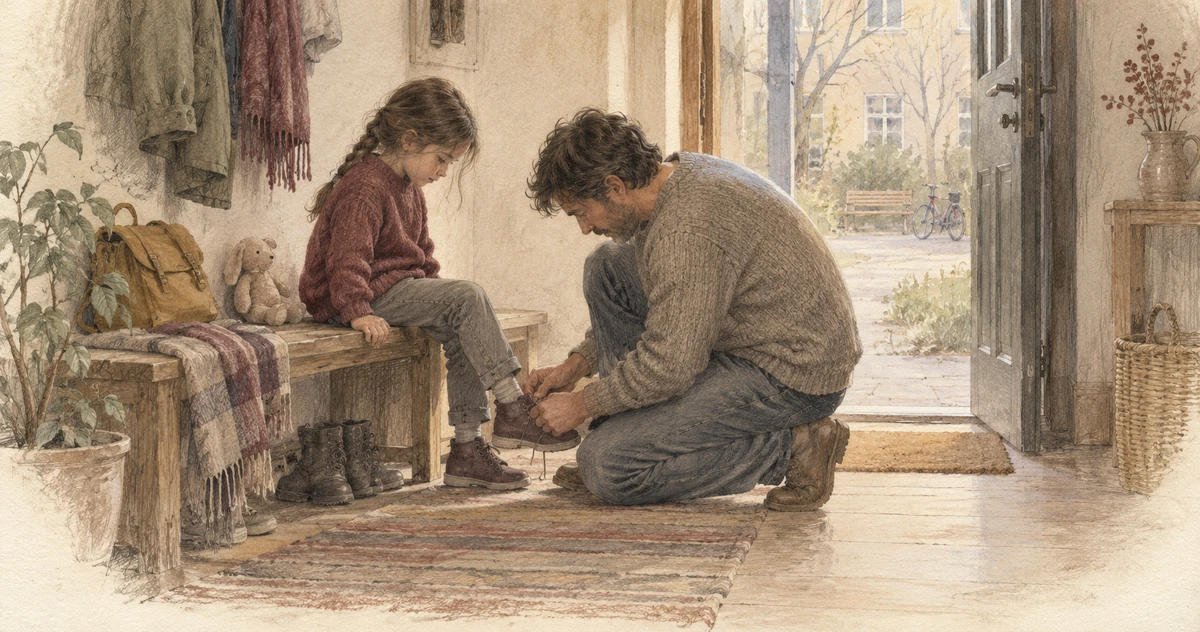
Being here also brings me back to something I understand more clearly as an adult: how much I missed having a stable family when I was a child. I can feel the importance of what was absent then. I wonder how different life might have felt if there had been dependable adults around me, people I knew I could count on.
I still miss having that stable network around me. I feel lonely without it, and I think I would feel differently if it were there. I cannot know exactly who I would have become under other circumstances. But I believe I would have felt more secure as a little boy if I had known there was someone I could turn to.
When I think about what I would want to give a child, that is where I begin. I would want them to know that an adult takes responsibility for their care and that needing help will bring someone towards them. I remember the insecurity of not having anyone to count on. I want a child in my care to be able to trust that someone will be there.
This is why the idea of a family home matters so much to me. I want children living with loss to feel that they belong to a family. The people they have lost would still matter. I would hope to give the children care in the present, with room for their grief and their own understanding of what family means to them.
The home I hope to create
While I am here in Ukraine, I intend to look at houses and explore what is possible. The home is something I hope to create. I am determined to do what I can to make it real, while understanding that wanting to help is the beginning of the responsibility. I still have to find out how that care could be provided properly and consistently.
I think about children who have lost a father, a mother or both parents. I also think about a surviving parent who is grieving and cannot manage everything alone. I would want to understand what that parent has been trying to carry and what support the family needs. Needing help would not make me look down on them or dismiss what they have already tried to do.
I love helping children, and helping people matters deeply to me. What would make this home meaningful would be the children’s experience of living there: whether they felt secure, cared for and able to depend on the adults around them. That is what I would want to work towards, through the ordinary days as well as the difficult ones.
When I look at the people around me now, I see people trying. I feel admiration, sadness and frustration at how easily their lives can be judged from elsewhere. I want that feeling to lead to something I can offer. There is much I cannot change about what has happened, but I hope I can help create a home where a child feels they have a family. I want every child to have someone to count on.
End of Part V
The same questions enter our working lives: whose voice is heard, who carries the uncertainty, and who is allowed to decide? Quiet leadership brings the reading journey into shared responsibility.
Continue to Part VI
Quiet Leadership
Letters from Kamil Larsson
Get the next essay
New essays and occasional notes, sent when there’s something worth sharing.
Your inbox, respected. No selling your address. No open tracking.